
What is a Doula?
Birth & Postnatal Doula London: A Complete Guide to Support, Costs & Choosing the Right Doula
Doula meaning and origin of the word
‘Doula’ is a word I often have to repeat, then go onto explain, when meeting someone for the first time. The word ‘Doula’ comes from the greek word for ‘female slave’, doulē. Doula, has come to mean, a person who offers emotional, practical and informational support in pregnancy, birth and in the months after birth, the postpartum.
A brief history of doulas and birth support
The act of women supporting women in childbirth is 300,000 years old, as old as humanity. In recent history, there is record of the role being more formalised, an experienced woman in the community providing birth support. Very recently, the last 150 years of our 300,000 years, the approach to birth has been increasingly medicalised. In the current medical structure, there is little opportunity to build a relationship with our caregivers and for them to truly get to know us. Having consistency in our supporters, continuous support, is known to improve birth and postnatal experiences.
https://pubmed.ncbi.nlm.nih.gov/28681500/
For millennia, humans have lived in close communities with family, extended family and neighbours. In these communities we would have heard, seen and even supported birth before our own birth experience. Similarly in caring for infants, we would have seen people caring for babies in close proximity, spent time with babies and cared for them before having our own. Increasingly over the last 100 years, we live in a nuclear family structure, with less chance of gaining lived experience and a natural acquisition of skills. This can be felt quite acutely when we start our own families.
What a doula does (and doesn’t do)
A doula can be a continuous, supporting, presence through pregnancy, birth and postnatal journeys, easing feelings of lost community and passing on missing skills, allowing parents to feel at ease and confident. The support is responsive to the needs of the parents, to both offer guidance and to follow their lead. A doula is impartial, experienced and comes with an open heart. In pregnancy, a doula will help parents prepare physically, emotionally and practically for birth and becoming parents. During birth, a doula will consider and act upon the state of mind, comfort levels and environment of the birthing person, helping the parents to navigate their journey to birth. As parents get to know their baby in the months after birth, a doula can be an extra pair of hands and a guide, a doula will care for the whole family. A doula is not medically trained and will not give medical advice nor, make decisions on the behalf of parents.
What Does a Birth Doula Do?
Support during pregnancy
In pregnancy, a birth doula supports the parents to explore their hopes around birth, by guiding them through a range of topics. The support is informational in part, but a big focus for the doula is to understand her clients- what makes them feel relaxed, secure and supported. The meetings in preparation for birth form a valuable foundation for the parents, allowing them to access and develop their birthing ethos, and polish their intuition. Their birthing ethos and intuition can help to inform choices pregnancy birth may present. A polished intuition is a wonderful skill for parenting too.
Support in pregnancy covering
Support during labour and birth
A doula will keep in close contact with her clients ahead of a birth, asking to be informed of any ‘birthy’ signs. ‘Birthy’ signs may include unusual bowel movements, signs of the mucus plug, discomfort, notable changes in emotions, surges/contractions & waters releasing, to name a few! The doula, will also ask to be informed, of any relevant information, timescales & next steps from appointments a client may have with a healthcare professional. Clients can call their doula (at any hour of the day or night!) when they believe that they may be going into or, are already in labour.
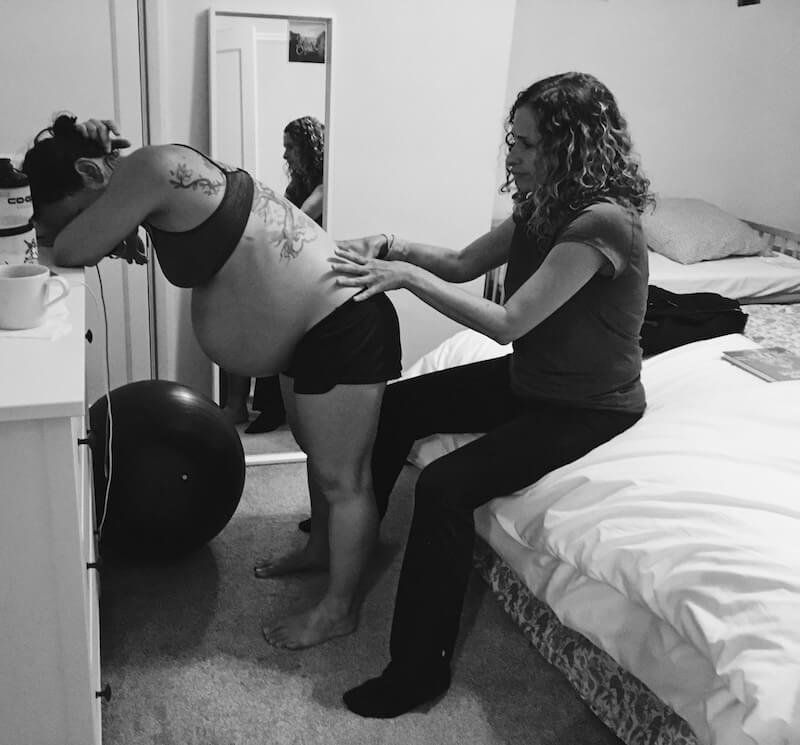
During birth a doula will tune into the parents she is supporting, to provide emotional and practical support. The support will be informed by everything she has learnt about the parents during pregnancy, coupled with her experience and knowledge of birth. The support will be unobtrusive: a reminder of a comfort technique, words of encouragement, breathing with her client during a contraction or an offer of a physical comfort technique. A doula will keep the birthing environment, be that at home or in hospital, as the client has indicated. If a need arises, a doula can work with the clients to gather information so the client can make informed decisions in the moment.
A doula supports both parents, she fills in the gaps, she gives space, she steps forward when needed.
After birth
After birth, a doula will slip away once a client is comfortable and content. Within a week or so of birth she'll visit you at home to discuss the birth and how you are finding early parenthood. Many doulas support client’s in the months after birth, the postpartum, as a postnatal doula.


Find out about my London Doula Services here.
What Does a Postnatal Doula Do?
Support in the early days after birth
The early weeks (months!) are a steep, love-fuelled learning curve and a time of recovery so, as parents get to know their baby, a doula can offer guidance, empathy, encouragement and an extra pair of hands. There are some modern expectations put upon babies, which most babies haven’t agreed to, so a part of the doula role is to signpost to information to normalise infant behaviour in particular. Normalising infant behaviour can be massively reassuring and confidence building for new parents. A doula will care without judgement, following the lead of the parents.
Newborn Care & Feeding Support
A postnatal doula can offer guidance and help around the practical aspects of caring for a baby, including:
Infant feeding, whether breastfeeding or bottle-feeding. Many doulas have training around breastfeeding and are very experienced in bottle feeding.
Understanding infant sleep and how to settle a baby to sleep. Although, in the early days the support might be more about waking a sleepy newborn baby to feed!
Demonstrating and carrying out nappy changes, bathing, clothing changes and general newborn care.
Spending time with your baby while you rest.
Overnight care, caring for your baby while you sleep.
Support for Recovery & Adjustment
A postnatal doula will support both you and your family. A doula can support your recovery by:
Creating time for you to rest.
Discussing your birth experience and if needed unpacking feelings around it.
Negotiating challenges with you, talking concerns through and researching into the solutions with you.
Signposting to relevant organisations or professionals.
Carrying out light housework tasks.
Preparing food.
Caring for siblings.
Caring for pets.
Plus many more!
Emotional, Practical & Informational Support
A postnatal doula’s role can be broken down into three key areas.
Emotional support – listening to your experience, encouraging and normalising with the aim of polishing your intuition.
Practical support – Another pair of hands to help with baby care and light household tasks.
Informational support – Sign posting to good sources of information and, if indicated, other professionals, such as Osteopaths, Lactation Consultants, Physios etc.
How Hiring a Doula Works (UK)
What’s included in a doula package
Typical doula packages may look similar to the below.
Birth package
• I’ll arrange two in-depth sessions with you and your partner to prepare for the birth and postpartum period.
• After these sessions, I’ll compile a detailed email with areas discussed, any relevant research and points to cover in our next meeting.
• Between our meetings we’ll stay in contact by phone, text, and email.
• I’ll be on call 24 hours a day, 7 days a week, from 38 weeks gestation until your baby is born.
• I will support you during the birth as you and your partner indicate. I’ll stay with you until your baby’s first feed is initiated.
• I will arrange a post-birth wellness meeting to check in with you, your partner and baby.
Postnatal packages
Similar to the below, postnatal packages tend to come in blocks of hours, these hours can be split down in agreement with your doula. Setting a schedule of support ahead of your baby's birth can ensure you get the pattern of support you require.
20 HOURS
40 HOURS
80 HOURS
100 HOURS
200 HOURS
400 HOURS
Contracts and agreements explained
When you are ready to book, your doula will produce a contract, outlining the extent and boundaries of services. After you have read and signed the contract, payment will kindly be required to complete the booking. A birth fee is typically paid in two parts, while a postnatal fee is taken in full at booking. If you are able to claim the doula’s fee back via a health care provider, such as Carrot or Bupa, your doula can produce a statement for your health care provider.
On-call support and availability
Part of the excitement around babies, is that we don’t know when they are coming, doulas are very used to working around this.
For birth support, a doula will space clients out in her schedule. Many doulas will not overlap on-call periods, so they will be available for only one birth client at time, from 38 weeks until the client’s baby is born. A birth doula may have other work commitments, such as postnatal work, but the birth will take priority when it happens. A doula will keep in close contact with her clients ahead of a birth.
In regard to postnatal support, a doula may have a number of clients at once. To reserve your doula for the support you require, setting a schedule of support at booking can be helpful. A doula will often try to offer her clients flexibility too. As said above, if a doula has a birth client when she is working for a postnatal client, the birth would take priority but often the stars align, and there is little, or no disruption to booked postnatal sessions.

Cara Jordan- London doula
Looking for a Doula in London?
As a birth and postnatal doula in London & South East England, I offer support during pregnancy, birth and in the months after birth, the postpartum period. The support is bespoke; shaped by your needs, circumstance, ethos & beliefs. My aim is for you to experience this life changing time feeling in your power, guided by your intuition and truly supported.
How to Book a Doula in London
When to start looking
I think the simple answer is to start looking for a doula when you decide you want one. Some clients start looking before conception, others once they fall pregnancy and for some scans prompt thoughts of finding a doula. Doulas don’t have unlimited availability so finding and then booking your doula can avoid disappointment.
How to choose the right doula
A phone or video call, can help you to establish if a doula’s experience, training and approach suits you. Once you have a short list of doulas, setting up a meeting with each of them, can give you a valuable chance to learn more.
Questions to ask in an interview
What lead you to becoming a doula?
How long have you been a doula?
What do you enjoy most about the role?
How many clients you supported as a doula?
What did your doula training entail?
Include any questions about your particular circumstances too.
& afterwards ask yourself….
Do you like them as a person, are you comfortable with them?
Do you want to invite them into your birth and/or postnatal experience?
Availability and due dates
Doula’s don’t have unlimited availability, so do book your doula when you find her.
How Much Does a Doula Cost in London?
Typical UK price ranges
Birth support in London may cost between £2000-£4000.
Postnatal support could cost between £35-£50 an hour.
What affects pricing
Doulas set their pricing in relation to their packages, experience, skills and business costs.
Is a doula worth it?
Yes! Doula support has been shown to have the below benefits, quoted from the Doula UK website.
Benefits of having a doula
Quoted from the Doula UK website.
Shorter labours with fewer complications.
Reduced requests for pain medication.
Reduced likelihood of a caesarean birth or an assisted delivery.
Higher likelihood of establishing and continuing breastfeeding.
More positive birth and postnatal experiences.
Reduced rate of induction of labour.
Improvement of equity and culturally responsive care.
Research Papers
What is a doula and how do they help women giving birth? - The Conversation
The evidence for doulas -Evidenced Based Birth
'A qualitative study of volunteer doulas working alongside midwives at births in England: Mothers' and doulas' experiences.' - Midwifery Volume 56, January 2018. Jenny McLeish, Maggie Redshaw.
'Continuous support for women during childbirth.' - Cochrane Systematic Reviews 2017. Meghan A Bohren, G Justus Hofmeyr, Carol Sakala, Rieko K Fukuzawa, Anna Cuthbert.
Continuous support for women during childbirth.' - Cochrane Systematic Review 2013. Hodnett ED, Gates S, Hofmeyr G, Sakala C.
'Impact of doulas on healthy birth outcomes' - Journal of Perinatal Education 2013. Kenneth J. Gruber, Susan H. Cupito and Christina F. Dobson.
‘Benefits of massage therapy and use of a doula during labor and childbirth’ Alternative Therapies in Health & Medicine Jan 2000. Keenan, P.
‘Supporting women in labor: analysis of different types of caregivers’ Journal of Midwifery & Women’s Health Jan-Feb 2004, Vol 49(1), pp.24-31. Rosen, P.
My doula services in London
BIRTH DOULA IN LONDON
By really getting to know you, your partner and your hopes around birth, I can personalise and deepen the support I offer as a birth doula in London and the South East.
POSTNATAL LONDON DOULA
As you get to know the new addition to your family, I can be an emotional and practical support. I’ll be there for you and your family as a postnatal doula in London and the South East.
My approach
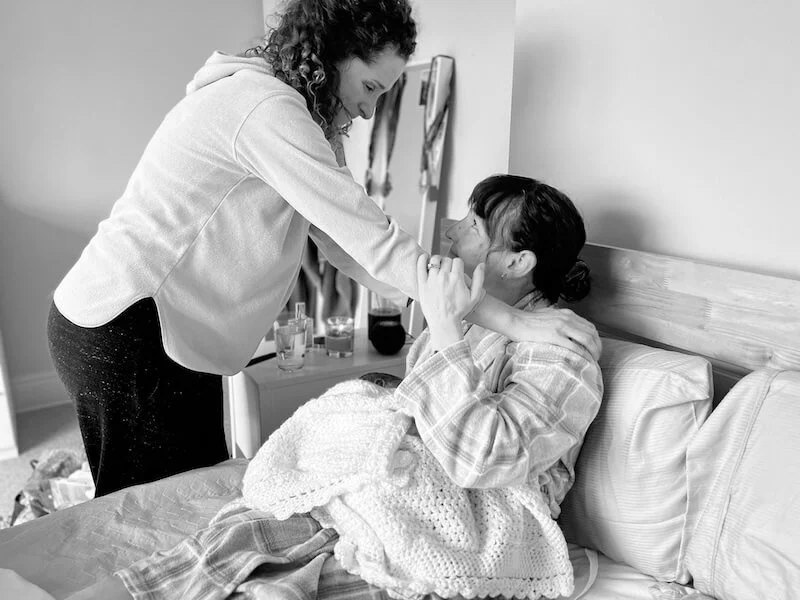
I love being a calming, reassuring presence for my clients and seeing the difference that can make. I will support you and your partner in your choices and as you need. I would consider it to be an honour to be part of your journey.
Book a call
Please do not hesitate to get in contact to ask any questions or to arrange to meet. The introductory meeting is without obligation and free, it’s a great opportunity to learn more about one another
Common Concerns About Hiring a Doula
-
Yes, doulas are very welcome in hospital.
-
No, a doula supports all birth. A doula will support you as your need and in your choices.
Through my work as a birth doula I have experience of; both home and hospital birth, undisturbed natural birth, epidural birth, caesarean birth, gentle caesarean birth, hypnobirthing, vaginal birth after caesarean (VBAC), solo mamas, induction, water birth, birth over 40 years, IVF babies, twin birth, twin home birth, Heart babies, birth after loss, infant loss, complex health pictures and supporting fears & phobias around birth. I love being both a sole birth partner and an additional birth partner.
-
Midwives facilitate medical care; monitoring of the mother and baby, physical examinations, administering medication & clinical note taking. Midwives also encourage birthing people as they navigate their birth path. This is where the roles of the doula and midwife cross over. I feel we are motivated by the same thing, to support a woman through the most transformative of experiences. The roles are complementary with the birthing person at the centre. Doulas and midwives have respect for one another.
-
The intention of a doula will be to hold a couple, a family, connected to each other in the centre, with her providing a cushioning layer on the outside. A doula’s support fills in gaps, is an extra pair of hands, is guided by you & understands you as people. Clients’ report feeling that they were both supported, that they both had someone else to lean on when they most needed it.
-
A doula can add support, perspective and calm to a medical birth experience. She will aim for you to feel central to your birth experience.
Through my work as a birth doula I have experience of; both home and hospital birth, undisturbed natural birth, epidural birth, caesarean birth, gentle caesarean birth, hypnobirthing, vaginal birth after caesarean (VBAC), solo mamas, induction, water birth, birth over 40 years, IVF babies, twin birth, twin home birth, Heart babies, birth after loss, infant loss, complex health pictures and supporting fears & phobias around birth. I love being both a sole birth partner and an additional birth partner.